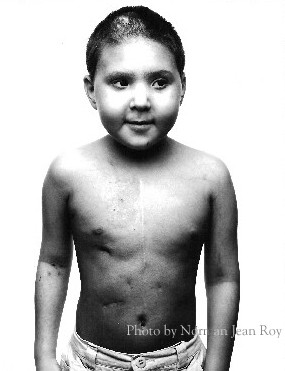
| Dear Henry Letters to my son. |
|
Monday, May 12, 2008 ![]() Big things happened this weekend. Michael and Rachel became B'nai Mitzvah. There were events starting on Friday night, but here is just a sample of the party from Saturday night for all the kids.
posted by Allen Goldberg |
Monday, May 12, 2008 Wednesday, May 07, 2008 ![]() We haven't seen Dr. Wagner in the news lately, and by the way the little guy who was so sick who he transplanted is doing okay now, but here is Dr. Hughes. I am writing this while I watch a documentary that I learned about from our friend Cindy Bullens. The movie is called Space Between Breathes. It is about parents who have lost children. A mom who lost her son just said how deeply you grieve is a measure of how intense you love. I loved you a lot. The Ethics Of Reproductive Technology Debated 06 May 2008 New advances in reproductive technology have pushed medical diagnostics to both theoretical and practical limits, according to Mark Hughes, MD, PhD, director of Genesis Genetics Institute in Detroit and director of the Applied Genomics Technology Center of Michigan, who spoke at the opening session of The American College of Obstetricians and Gynecologists' (ACOG) 56th Annual Clinical Meeting. "The rapid growth and clinical adaptation of genetically based information and technology are fundamentally changing the practice of medicine, especially for ob-gyns," said Dr. Hughes. Because of these advances, there are technologies now available to couples wanting to avoid inherited disease in their offspring even before a pregnancy begins. "Knowing the roadmap of the human genome gives us powerful tools to help our patients in ways we might barely have imagined just a few years ago," added Dr. Hughes. "In ob-gyn this information presents especially complex practice dilemmas." The field of reproductive medicine, perhaps more than any other field, is continually confronted with ethical considerations. "Just because we technically can do something doesn't mean we should," noted Dr. Hughes. "Through the ages, technology has been the fuel that drives the engine of science, and science is the vehicle that propels the progress of medicine, and medicine routinely drives us into bioethical corners. "Preimplantation genetic diagnosis was invented 18 years ago, and it's come a mighty long way," said Dr. Hughes. "It is now possible to detect quite complex problems in the smallest unit of life (one cell), in the smallest unit of inheritance (one gene), for the smallest part of a gene (one DNA nucleotide), out of 3.3 billion letters that comprise the human genome. "Even in 100 years of medical advances, diagnostics will not be smaller than examining-overnight-one molecule. The technology itself will surely evolve with time, but we are now at the limits of the biology that can produce severe pathology in our patients," added Dr. Hughes. Preimplantation genetic diagnosis (PGD) is a reproductive technology used with an in vitro fertilization cycle. It involves testing the genetic material of embryos to look for specific genetic mutations or chromosomal rearrangements. It is generally used by patients who know they are at risk of transmitting a genetic disease or chromosomal abnormality to their offspring. For example, a couple could face a 25% or 50% risk of a producing a child with a particular disease. This risk is not trivial, Dr. Hughes said, and many couples choose not to have children. Other couples may accept this high risk and wait anxiously during the first months of pregnancy, wondering if their fetus has cystic fibrosis, muscular dystrophy, hemophilia, or any one of hundreds of genetic disorders. "Their anxiety is significant. Do they want diagnostic testing such as chorionic villus sampling (CVS) or amniocentesis, and what will they do with the information after they have it?" commented Dr. Hughes. "By testing a fertilized egg prior to implantation, modern science can now eliminate this risk and this stressful time for couples." PGD has largely been used to help couples who suffer with infertility and for couples at risk of having children with a heritable genetic disease. The concern now, however, is that the technique might be used to select characteristics that range from less serious disease to purely matters of preference, such as gender. "Who decides what's ethical and what isn't?" asked Dr. Hughes. "It varies from one country to the other." Dr. Hughes points out that while most people approve of a couple finding out before implantation whether an embryo has a lethal disease, the discussion becomes murkier when it concerns a non-fatal disease or condition or even gender.
posted by Allen Goldberg |
Wednesday, May 07, 2008 Wednesday, April 30, 2008 ![]() I think it was last year that I showed you a story about David Ortiz in Sports Illustrated. Yesterday I read an article about his teammate, Manny Ramirez, in the USA Today. ![]() Jack is still a huge Red Sox fan, and Mom, Joe and I definitely like Manny. This was my favorite part of the article. "My biggest dream is not to hit 500 home runs or 600 or 700," says Ramirez, who turns 36 on May 30. "My dream is for God to give me enough health to watch my kids grow up, have a beer with them, watch them graduate. That's my Hall of Fame. "You might hit a home run or whatever, but getting home and having your kid tell you, 'Daddy, I love you,' that's priceless." Those words might seem at odds with Ramirez's image as a goofy character without a care in the world, an impression bolstered by his baggy uniform, flapping dreadlocks and lapses as a fielder and baserunner. But current and past teammates, as well as others close to him, insist that snapshot doesn't fully capture Ramirez. ![]() Labels: David Ortiz, Red Sox posted by Allen Goldberg | Wednesday, April 30, 2008Tuesday, April 29, 2008 ![]() Here is more on Tyler Jenkins. This time he is on a local Washington, DC television station. This is a better segment. We got the Fanconi directory yesterday from the Fanconi Anemia Research Fund. I think I am going to write an email to the family support coordinator and suggest she reach out to Tyler's family. I am sure that Cincinnati Children's has given them resources, but just in case. ![]() Martinsburg Boy Diagnosed With Rare Blood Disease Tyler Jenkins is a typical ten-year-old, he loves video games, watching football and eating junk food. But Tyler is dealing with something so atypical and his parents are sick with grief. "I just don't understand. He's ten-years-old. If I could trade places with him, I would. I've been here long enough. Just to make him better," said Charles Jenkins, father.
posted by Allen Goldberg |
Tuesday, April 29, 2008 Monday, April 28, 2008 ![]() We went to Cleveland for the second half of your brothers' spring break. Mom took them to Rehoboth Beach for most of last week and then on Friday we went to Cleveland. On Friday night we went to see the Indians play the Yankees (for Joe, who loves the Yanks); on Saturday we went to the Rock and Roll Hall of Fame (for Jack, me and Mom, who love Rock and Roll); and on Saturday night we went to visit Mom's college roommate and great friend, Jane Esselstyn and her kids. As always, I was thinking of you and remembering my past visits to Cleveland. I thought about the last two times I was there. One was on my way back from dropping the cells off with Dr. Hughes in Detroit. I had driven from New York City through a hurricane to get the biopsied cells to his lab for analysis. I then turned right back and headed towards Mom in New York, only stopping for about 4-5 hours sleep in a hotel off the highway near Cleveland. And the last time was on my way back from Minnesota after your transplant. You, Jack and Mom flew on the Honeywell corporate jet home, and I drove our green Isuzu Rodeo, with our stuff piled up inside, back to DC. My first stop was in Madison, Wisconsin and my last stop was in Cleveland, where I had dinner and stayed overnight with Karen and Chip and their brood.Karen is still in China. Mom got an email from her yesterday. Mom remembered the trips we made to Cleveland for Karen's wedding and Jane's wedding. What we didn't talk about was the stop we made there on the way to Minneapolis. Strangely, when I got online today I got an email alert (I'll explain those later) that gave me this link... http://www.nytimes.com/2001/07/01/magazine/01FANCONI-JOURNAL.html?ex=1209528000&en=2175d59d0515b521&ei=5070 Google must have just indexed the New York Times archives from 2001 or something. It was a weird coincidence. Mom's description of "what felt like the longest walk around any block ever," really brought me back. I always think that if I ever have to remind myself that I have the courage to do anything, I will think back to when I removed your respirator so you could die. Mom has done some incredibly brave things and that walk is one of the bravest. This trip had no great drama, but it was great all the same. We went to Jacobs Field, where Mom and I went to a game the weekend of Karen and Chip's wedding, and watched a decent slugfest that the Indians ended up winning 6 to 4. Joe was just a tiny bit disappointed. Oh, and the park is called Progressive Field now. I always find it a bit painful going to a ballgame during Passover. No hotdogs or beer. I actually had a kosher hotdog without a bun. That stunk. After the game they had a terrific fireworks which we all enjoyed. I told you a few years back how the Rock and Roll Hall of Fame sued Jeffrey, David and me for trademark infringement. That was all pretty silly and definitely not "rock and roll." We changed the name of the organization and the website to Jewsrock.org. I had never been to the Rock and Roll Hall of Fame even though I love rock, had been sued by them and once donated something from XM to the place for display. So I guess it was time.They had a lot of great exhibits and movies. I know that Jack really enjoyed himself. Joe, not so much. But he was a champ and hung in there. We were there for close to 5 hours and we could have used an additional day. After the Rock Hall we headed to Jane's family's home in the hills of northeastern Ohio. The property is called The Knob. You were there once with Jack and us, and you had a blast. You played the homemade "Toss Across" game they have. You threw bean bags through holes in the wood board. I showed it to Joe and of course he starts whipping the beanies like they were baseballs. I think he was showing off for Crile, Jane's oldest daughter. I told him that a good method was the underhand toss. Nothing doing. I guess I've been to the Knob twice before. Once was with you and the other was for Jane and Brian's wedding. I remember that you and Joe hung out at Karen's mom's house during the wedding. The property has been in Jane's family forever. The road that we got on when we exited the highway was called "Crile Road." Crile is Jane's grandmother's family name. In the bathroom on the first floor of the house there is a photo of Lou Gehrig. There is an inscription from Lou's wife Eleanor to Jane's grandfather. She says that of all of the people who cared for her husband, Lou loved Jane's grandfather the most. He was a doctor - but also an athlete - big and strong like Lou. It truly is an amazing personal tribute and piece of history. It is a cliche, but they don't make heroes like Lou Gehrig anymore. He was an amazing baseball player who just let his performance on the field do the talking. His "quiet" greatness would make a good role model for Joe. Jane and her whole family (for generations) are just so interesting and impressive. When we were there, Jane showed us a book that her mom and dad just wrote. It says that to live a long and healthy life you shouldn't eat anything with a mom or a face. Yuck. That means no meat or dairy. People who eat like that are called "vegans." Since I can't eat dairy and Mom doesn't eat meat, it makes a lot of sense for us. We're going to try it. We'll see how long we can stick to it. Don't worry. Your brothers still get to eat whatever they want. Jane is always a delight to be around. She is full of life. Her kids are great too, and it was nice to get to know them. Jack really enjoyed hiking through the woods and learning stuff from Jane. She used to be an Outward Bound instructor and knows so much about the outdoors. Unfortunately, Brian was busy and wasn't able to be there with us over the weekend. We finally headed out on Sunday morning after some rock climbing and zip lining. On the trip back Mom and I spent some time listening to a book on my iPod called Love Is a Mix Tape by a guy named Rob Sheffield. It is about Rob's wife Renee, who died suddenly of a pulmonary embolism. When I first put it on I was worried Mom was going to say, "not another thing associated with your fixation on death and dying." But she didn't. She actually really liked it. The way Rob describes his love for Renee and their life together, and his sadness at her dying is wonderful. It made me think of you and it made me think of Mom. Listening to a book really makes the trip easier. We did run into traffic right outside of Hagerstown, Maryland. The cars on the highway just stopped. We listened to the radio and learned that there was an accident on the other side of the road. We figured that it must have been pretty bad considering all of the emergency vehicles that were on the scene. Mom was just praying that the guys wouldn't have to see anything terrible. They cleared it all before we got to the scene. While we were stopped, I noticed a car next to us that said, "In Memory of Ashley Maria Bellosi 1984-2007" on the back window. The windows were all tinted really dark. You couldn't see the people inside. I was wondering if Ashley's parents were inside. I think the whole phenomenon of putting that kind of thing on your car, which is totally new, is interesting. I wouldn't do it (though your initials HSG make up the license plate on the Vespa), but it does allow people to honor their loved ones in a way they want - very public. I looked up Ashley Maria Bellosi when I got home and what I learned was so sad and tragic. Ashley was a beautiful young woman in Baltimore who last year was beaten to death by her boyfriend. Long illnesses, sudden or violent... it all stinks. Maybe this whole thing is my "In Memory of Henry Strongin Goldberg 1995 - 2002." ![]() Labels: jewsrock.org, Rock and Roll Hall of Fame posted by Allen Goldberg | Monday, April 28, 2008![]() Here is a news story about a kid, Tyler Jenkins, who has FA. The weird thing is they talk about how rare the disease is, but there is another kid Devin Fales, who has FA and if I am not mistaken, lives near Tyler's home. We drove through that area yesterday on our way back from Cleveland. Those parents should get together. ![]() They are only 16 miles away from each other. Here is the last post that Devin's mom wrote. April 26, 2008 at 09:54 PM EDT Hello to anyone who still checks on Devin, thank you for being faithful. I don't have much to say because Devin has been very healthy. He did get his second round of shot for the HPV vaccine so only one more to go. He will also finish he other vaccines in October. That will be two years after transplant, can you believe that. Last summer we still had to watch the activities Devin wanted to do but this year we have no limitations. Devin plays hard all day long, he was outside all day today playing. He never could have done that before, he would tire out so easily. we are in the process of looking for a good hearing doctor because Devin is having a hard time hearing. If you know of a good doctor please let me know. He has an appointment to see a dermatologist because he has two moles we want looked at, they have changed since transplant so we want to make sure they aren't cancerous. He needs to have his counts checked so when we get those back I will let you know how they are. Then the big thing is getting him to grow. This summer we are going to look into his growth hormones. Devin went to his first drag race of the year friday night. He loves drag racing and he was excited to have the season start. Well not much else to report here. Thank you for checking in on Devin, sorry for the lack of posts but he is just doing great. Love from the FAles' family Tyler is going to be transplanted in Cincinnati. In the video, his dad is understandably upset, but they are doing what they can and also the right thing by taking him somewhere that has great Fanconi transplant expertise. If his sister is a match, then he has a great chance to be okay. I definitely don't like the last line of the story. Seems pretty harsh. Tyler looks strong. He'll come out of it all right - Just like Devin. http://your4state.com/media_player.php?media_id=17813# ![]() Martinsburg Boy Diagnosed With Rare Blood Disease Reported by: Sarah Hopkins Sunday, Apr 27, 2008 MARTINSBURG, WV – A little boy in Martinsburg is the victim of an extremely rare genetic blood disease. There are only 3,000 cases of Fanconi Anemia worldwide; 1,000 cases in the United States, and in Martinsburg, there is one: 10-year- old Tyler Jenkins. 10-year-old Tyler Jenkins’s life has changed drastically. Since he was diagnosed last month with Fanconi Anemia, a rare blood disease that affects the bone marrow, he has been pulled out of school and kept isolated from his friends. “It makes me kind of sad because I don't have anybody to play with or anything,” said Tyler Jenkins, diagnosed with Fanconi Anemia. There are several physical signs that Jenkins said their doctors didn't recognize. They always knew Tyler had deformed thumbs and skin discolorations. Still, learning the news was a shock. “I just dropped the phone, and I fell and I just sat there and I cried and cried and cried,” said Kelly Jenkins, mother. “I can do everything in my power to make to try to make it better, but you know, only God knows what's going to happen, and I don't have no control over it, no matter how hard I try,” said Charles Jenkins, father. It has been overwhelming for Tyler. “It just made me really sad, and I just wanted to cry for the rest of my life until I got better,” said Tyler. Tyler spends most of him time playing video games; one of the few things he can do that doesn't tire him out, while he waits for a trip to Cincinnati to visit one of only two hospitals in the U.S. that treats people with his illness. The Jenkins’ will have to pick up and leave for six-months while Tyler undergoes chemotherapy and radiation, a struggle for a family that lives week-to-week. ![]() “We are pretty much just trying to get by-however we can,” said Jenkins. While they have been working hard to raise money, the Jenkins said the disease is so rare and the bills are so high that it's difficult. No matter the cost, the Jenkins said they are in it together, even their five-year-old daughter who could soon be donating her bone marrow to her brother. “He loves me, and I don't want him to get sick no more,” said the daughter. In Cincinnati, Tyler will be kept in isolation and under constant evaluation. Doctors said depending on how the treatment goes, his life expectancy is anywhere from a few weeks to years. ![]() Labels: Fanconi anemia posted by Allen Goldberg | Monday, April 28, 2008Thursday, April 24, 2008 ![]() The guys have spring break this week. Mom took them to the beach. I stayed home and worked. And fed Joe's fish, Potato Man. ![]() ![]() Labels: Rehoboth Beach posted by Allen Goldberg | Thursday, April 24, 2008![]() Last Sunday morning we went on a tour of the new National's ballpark. I went to a game the week before with my boyhood friend Steve Feldman. It was the second game to be played there. It wasn't as cool as the tour of Fenway that I took, but hopefully it helped get the guys excited for Nats baseball. Maybe it did. Here are some of Joe's drawings from this week. ![]() ![]() Also last weekend, Joe and I went to watch the Caps play in a Stanley Cup playoff game. They won. It was great. ![]() ![]() ![]() Labels: Nationals posted by Allen Goldberg | Thursday, April 24, 2008Friday, April 11, 2008 ![]() Your brother made the cover of the school newsletter. I get this thing every week and have never opened it. Mom told me about it. We get so many emails from school I rarely look at anything unless it has a subject line that says, "Joe is making monkey faces during circle time." Haven't gotten that one just yet, but close. ![]() ![]() Labels: JPDS posted by Allen Goldberg | Friday, April 11, 2008Wednesday, April 09, 2008 ![]() ![]() Blanchard students give young transplant patient a big send-off By Melody Brumble mbrumble@gannett.com BLANCHARD — Huntur Newton shied from the spotlight on the day dedicated to him. Classmates at Blanchard Elementary School celebrated Huntur Newton Day on Tuesday as a send-off for the kindergartner who'll undergo a bone marrow transplant to treat a rare kind of anemia. "He said he didn't want to be in front of anybody (Tuesday)," Raelene Newton, Huntur's mom, said as her son eyed gifts presented to the family. ![]() His younger sister, 4-year-old Madalyna, was less shy. She peered into a tent-like playhouse given to the family and jumped into a battery-powered Dodge Viper race car Huntur received during the assembly Tuesday morning. Huntur has Fanconi anemia, an inherited condition that causes a host of physical problems. At its worst, the disease causes the body's bone marrow to stop producing blood cells. The disease also makes people more likely to develop cancer. Estimates of the number of people living with the illness worldwide range from 450, the number registered with the nonprofit Fanconi Anemia Research Fund, to about 1,000 in a registry maintained by a Rockefeller University researcher. Huntur's youngest sister, 4-month-old Morgan, will donate bone marrow for the transplant. "We told him he has sick blood and his sister is going to give him new blood," said Huntur's mom. "He's more concerned about having good food." She and her husband, Cody Newton, have tried to give Huntur a normal childhood. A mask over his mouth and nose is the only concession to his upcoming surgery. He must be free of infection for the transplant to take place. "We try not to baby him," Raelene Newton said. "For example, his scissors. He has a special pair of scissors because of a problem with his thumbs. But we got him to try regular scissors, and he uses those." The Newtons said they're grateful for support from the community. Pickett Industries will fly the Newtons to Minneapolis on Sunday and return to pick them up about three months from now. Employees of the Caddo sheriff's office, where Cody Newton is a deputy, donated enough leave time that he'll be paid for the entire time the family is in Minnesota. ![]() Individuals, organizations and the school have raised more than $8,000 in the past month to help with the family's medical and living expenses. Delta Delta Delta Wish Upon a Star provided gifts based on Huntur's wish list for his family. Teacher Cindy Bickham. who heads up the organization, said it took some prying to get Huntur to come up with his own three wishes. Fourth-grade teacher Frances Tyl and her husband donated a toolbox to be raffled, raising more than $4,000. "We knew we couldn't take this disease from Huntur, but we knew we could help by raising some money," she said. ![]() Labels: Bone Marrow Transplant, Fanconi anemia, Minnesota posted by Allen Goldberg | Wednesday, April 09, 2008Tuesday, April 08, 2008 ![]() Happy homecoming Boy returns from blood disorder treatment By Airan Scruby, Staff Writer 04/07/2008 Staff Photo by Keith Durflinger PICO RIVERA - After more than five months of intense medical treatment in Minnesota for a rare blood disorder, 11-year-old Gregory Ramsey is back home.Gregory received a hero's welcome at Los Angeles International Airport on Saturday night. Gregory and his mother, Mary Ramsey, were greeted by his grandmother and rode home in a limousine donated for the night. The family was escorted by sheriff's Pico Rivera Station deputies to meet extended family members and a house decorated for Gregory's return. "It's been a long time since I've seen him smile so much," Mary Ramsey said. According to sheriff's Lt. Joe Chavez, Capt. Michael Rothans asked him to organize the escort after reading about the family in the newspaper. The deputies who participated in the escort volunteered their time Saturday night. "Here's a little boy fighting for his life, and Capt. Rothans felt compelled to do something," Chavez said. "Just bringing him home like the hero that he is, it's worth it." Although his medical treatment is far from over, Gregory is now recovering from a bone marrow transplant received in December for his Fanconi anemia, which can cause heavy bruising, a weakened immune system and, if untreated, is fatal. To receive the transplant, chemotherapy and other care from doctors who specialize in the disease, Gregory, along with his parents and younger brother Christopher, traveled to Minnesota and lived at the Ronald McDonald House near University of Minnesota Children's Hospital. The family was allowed to return home when Gregory's blood tests and other indicators showed his body was initially accepting the new bone marrow and producing enough white blood cells. "He came home and yesterday he was playing piano," Mary Ramsey said. She said the homecoming has meant adjusting to life away from the hospital, and preparing for more treatment at Childrens Hospital Los Angeles. "Things are going relatively well," Ramsey said. "But we're not out of the woods yet." Gregory will have to return to Minnesota in June for a checkup and will continue to have weekly appointments with a local doctor. His body is especially susceptible to infection in the year following his transplant, but he will continue regular meetings with his Minnesota medical team for five years. Although he will not be able to return to school this year because of his weakened immune system, his brother will go back to Brethren Christian School next week. His parents will return to work and family members will share the task of taking Gregory to doctor's appointments and supervising his home schooling. Gregory's father, Darren Ramsey, and his 8-year-old brother returning home by car, and hope to make it back to Pico Rivera by Wednesday or Thursday. "We're somewhere in Nebraska," Darren Ramsey said Monday. According to him, leaving the supervision of the hospital is frightening but exciting. "It was scary leaving Ronald McDonald House, but at the same time it was a happy thing," Ramsey said. "I just want to go home." While the family has been in Minnesota for Gregory's treatment, friends at home have organized fundraisers for an expected $80,000 in medical and travel expenses, above what insurance will cover. Lezli Brown, a teacher at the boys' school and family friend, said students at the school raised more than $800 in a penny drive, and a local church collected more than $400 for the family. A pancake breakfast was also held and an ice cream sale and raffle is scheduled at Mary Ramsey's office. "There's an ongoing need to help pay those medical bills," Brown said. For information on the Ramsey family, to leave them a message or to donate, go to cota.org airan.scruby@sgvn.com (562) 698-0955, Ext. 3029 ![]() Labels: Bone Marrow Transplant, Fanconi anemia, Minnesota posted by Allen Goldberg | Tuesday, April 08, 2008Monday, April 07, 2008 ![]() I made a book for Papa Sy with photos that I've taken at St. Michaels over the years. It was nice that it came just as he was having his procedure done for his heart. He is out there right now so he doesn't have to depend on pictures to enjoy how beautiful it is. ![]() Labels: St. Michaels posted by Allen Goldberg | Monday, April 07, 2008Sunday, April 06, 2008 ![]() Mom told me that when she was a little girl she was scared of the water. Joe is keeping the tradition alive. We have been "threatening" to take him to swimming lessons and we finally got the courage to follow through. We took him to see Trina and Rodger who are giving lessons at the Lab School. Jack and you took lessons with Trina a long time ago. It just isn't safe to have Joe around the pool at Nana and Papa Sy's and not be able to swim. Getting Joe from the parking lot to the pool took a bit of effort. He punched, scratched and spit on me. It freaked out Mom. I took his abuse, but I'll make him pay - somehow, someday. Maybe I'll show this video at his rehearsal dinner.
posted by Allen Goldberg |
Sunday, April 06, 2008 ![]() Friday was crazeee. In the morning, Jack, Joe, Mom and I met Jack's fourth grade teacher, Mrs. Klar, down at the Sumner School which is across the street from National Geographic. Jack had won the right to represent Jewish Primary Day School in the Washington, DC semifinals of the National Geography Bee. He was competing against kids from schools all over the city, including all of the elite private schools, like Sidwell, St. Albans and Maret. Joe was wearing his JPDS shirt to cheer on Jack. That was very sweet and cute. Jack understandably had been really stressed out the past few weeks leading up to this, but he was pretty cool and calm the day of the competition. He got a good night's sleep, which is key. When they called on him to answer his first question, my heart was pounding so hard in my chest. I told him afterwards that I really felt connected to him, and I was hoping that I was more nervous than he was. What I thought was cool was that after answering a few questions he got into a groove and I sensed that he started to "want it." He was confident. We had talked all week about how it was great to have just gotten to this point. I think that was forgotten once he got there. He wanted to win. He made it out of the qualifying round and into the finals. He was the youngest kid there. He did well, but as you can see on the video he boots an easy question. I talked to him afterward and he just thought it couldn't be that easy. I can see the gears cranking in his head. One other thing I saw was how mature he acted. When one of the competitors next to him missed a question he would give them words of reassurance. That blew me away, and made me more proud than anything. Prouder than the fact that he ended up getting 6th place overall. In the end it was great for Jack to have just gotten to the semis. He represented himself and JPDS incredibly well. After we went to The Palm to celebrate, all of us drove over to Washington Hospital Center to drop off Mom. Papa Sy had gone there that morning to have them look at his heart. As it turns out, one of his arteries was blocked so they put in a stent to let the blood flow. He came through all that like a champ. He is back out in St. Michaels now with Nana. And the last thing on Friday was a dinner for Mom's birthday. We went out with Aunt Abby, Uncle Andy, Aunt Tracey and Uncle Andrew. We had a great time, but I was bushed. Even with a visit to the hospital I think Mom had a great birthday. The guys got her a pair of pink converse sneakers. Tomorrow I'll show you what I got her. Love you. ![]() Labels: JPDS posted by Allen Goldberg | Sunday, April 06, 2008![]() Here is your no-good brother Joe on his way to bed. This is pretty much what we have to go through every night to get him upstairs to go to sleep. And no, this isn't in slo-motion.
posted by Allen Goldberg |
Sunday, April 06, 2008 ![]() I saw this article after I wrote the earlier post. Are they going to ban "Luxury Babies." All of this is craziness. ![]() Three Kids? You Showoffs. By Pamela Paul My husband and I are getting ready to do what many couples in these brink-of-recessionary times would consider unthinkable. No, we're not buying a Martha's Vineyard retreat or planning a month in St. Bart's or eco-decorating our house. We're planning to have a third child. What shocks people, when we tell them, isn't the thought of hauling three kids onto a place for a vacation, or even the idea of coming home every night to a houseful of runny noses and homework assignments. What gets them is the sheer financial audacity. Raising kids today costs a fortune. Last month, the Department of Agriculture estimated that each American child costs an average of $204,060 to house, clothe, educate and entertain until the age of 18. But to me, a family with just two kids seems minimalist, and even a bit sad. Back in the 1970s, when my husband and I were born, sprawling families were more common. My husband had two sisters and, following a Brady-Bunchy set of remarriages in my family, I wound up with seven brothers, real and step. I've always fantasized about creating a "Meet Me in St. Louis"-style household of my own, with children constantly underfoot and enough relatives around to skip to my lou en masse. And yet nowadays, people seem aghast if a couple wants more than two children. When Elana Sigall, a 43-year-old attorney in Brooklyn, was pregnant with her third, people came up to her constantly, she said, to admonish her: "You've got a boy and a girl already. Why don't you just leave it alone?" What's worse, the desire to have another child opens one up to charges of elitism and status consciousness. In many major U.S. cities and their suburbs -- especially New York, where I live -- having three or more children has now come to seem like an ostentatious display of good fortune, akin to owning a pied-Ã -terre in Paris. The family of five has become "deluxe." Last year, novelist Molly Jong-Fast mused in the New York Observer, "Are people having four or five children just because they can? Because they feel that it shows their wealth and status? In a world where the young rich use their $13,000 Birkin bags as diaper bags, one has to wonder." We not only wonder, we marvel, we get jealous, we gawk. "Having three kids in the city is a way of showing off, absolutely," says Elisabeth Egan, who, like many families she knows, moved out of New York to the suburbs of Montclair, N.J., to manage the feat. "A third child in the city is definitely a luxury good." It's true that, following in the designer maternity clothes of such fecund celebrities as Posh Spice (three kids) and Angelina Jolie (speculatively six), most of the people going for a third baby are well-heeled moms and their high-salaried husbands. A February analysis of Current Population Survey data by the Council on Contemporary Families found that in the past 10 years, the top-earning 1.3 percent of the population has seen an uptick in families with three or more children. According to the National Center for Health Statistics, 12 percent of upper-income women had three children or more in 2002, compared with only 3 percent in 1995. There's no question that it takes a lot more money to bring up baby nowadays. Many parents would scoff at the Agriculture Department's humble figures. When you get into the nitty-gritty, the price of kids feels more like a million dollars a pop. Consider raising a single "luxury" child. By luxury, mind you, we're not necessarily talking hedge-fund rich, merely able to afford and "raise right." And the pressure to do that, even if you're not uber-wealthy, has become overwhelming. From the moment the heartbeat blinks across the sonogram screen, Big Baby starts in with its pleading and conniving: I'm your child! How can you spare any expense? Don't you care? For a couple's every conceivable wish or worry, the parenting industry knows the precise formula of guilt, fear, hope, love and desire that will empty the parental wallet. Rather than fret about spending too much money, most parents these days are consumed by the anxiety of underspending -- the fear that somewhere, some other parent is offering her baby an educational toy or child-development class that will propel the toddler ahead, and that if you skimp, your child risks losing out and falling behind. So parents quickly adjust to the demanding realities of the child-rearing industry. Baby showers have replaced bridal showers as the blowout du jour; American women today have an average of three. The accompanying baby registries have mushroomed into a $240 million business, according to research firm Mintel International Group. Between diapers and bouncy seats, parents can count on spending at least $6,500 on the first year of baby gear alone. "You walk into Babies R Us, and you're just overwhelmed," recalls Brooke Houghton, a 35-year-old mom from Chicago who said she ran out of the store in panic after 15 minutes. "There was just so much equipment I hadn't even considered." Once a new mom's maternity leave (if she's lucky enough to get it) is up, a nanny or quality day care is in order. In upscale urban areas and tony suburban enclaves, where luxury families are flourishing, that can translate to $800 a week for child care alone. So-called high-end nannies -- those who hail from licensed agencies and come equipped with working papers and even driver's licenses -- can cost more than $50,000 a year on the books. And to think, some deluxe families hire two. After all, how can one nanny juggle a set of twin infants and a 3-year-old, or ferry three kids under 6 to their various play dates, preschool programs and lessons? For parents who both work full-time -- or those otherwise occupied with family, charitable and social obligations -- child care doesn't end when the children enter school. If you calculate nanny pay on top of $26,000 annual private school tuition (eventually multiplied by three), you're talking $140,000 just to keep your children safe and reasonably occupied while the sun's up. Once children are a bit older, there's the battery of ballet, piano, squash (offbeat sports viewed as an inroad to Harvard), and the vehicles needed to get there. Hyper-vigilant child safety laws mean that up to the age of 7, children are boxed into full-size or booster car seats. Try jamming three of those into the back seat of a compact car. Most families simply can't afford all this. And surely it can't all be necessary. Didn't Benjamin Franklin grow up to be a statesman, inventor, printer, author and political theorist without having his vision enhanced by a Stim-Mobile or his sense of spatial relations improved by Baby Einstein Numbers? Somehow young Ben managed to thrive and prosper even though the Teddy bear had yet to be invented. Today's American children, by contrast, get an average of 70 new toys a year, yet child development experts agree that the best toys are simple playthings such as blocks, balls and figurines that a child can play with over and over, in new ways. When I was growing up, a sticker was something precious that a stationery store owner would carefully cut off a roll and sell for 25 cents. Today, a made-in-China jumbo book of 600 stickers can be bought at CVS for $6.99. Something has been lost in this ostensibly positive development. Far from inducing feelings of inadequacy, saying no to the parenting consumer culture should make parents feel all the wiser. And conversely, no one should have to feel that they should refrain from having a child for fear of being accused of snobbery. Since her own pokes at deluxe families last year, Molly Jong-Fast has become a mother of three herself, having recently given birth to twins. "I don't blame people for having more, if they can," she told me. "If we had unlimited resources, I think we'd have more children, too." As for my husband and me, we hardly have unlimited resources, but we're still planning to go forth and multiply in the big city. The way we figure it, one day our children will be grateful for what we didn't give them -- and what we did for them instead. Some may call this rationalization or flat-out denial. Perhaps we mere mortals of the upper middle class, preparing to haul out the bassinet and the Exersaucer for a third go-round, should question our sanity. But we're banking on proving the naysayers wrong. Pamela Paul is the author of "Parenting Inc.: How We Are Sold on $800 Strollers, Fetal Education, Baby Sign Language, Sleeping Coaches, Toddler Couture, and Diaper Wipe Warmers -- and What It Means for Our Children."
posted by Allen Goldberg |
Sunday, April 06, 2008 ![]() In England, where Aunt Abby, Uncle Andy, Michael, Rachel, Josh and Noah are moving this fall, they are passing laws to make it okay for parents to help save the lives of kids who, like you, can be saved by having a matched sibling transplant. There are some people who don't want to let parents and doctors do this. The article that I posted the other day from the English newspaper was written because there is controversy about the laws. The mom in the article, Donna, said that no-one over there stepped up to help her and her son Jamie with FA the way Dr. Hughes tried to help us with you, and the way Dr. Verlinsky saved Molly. She then had a baby "the old-fashioned" way and it wasn't a match for Jamie. Understandably she was bummed the baby, Donatella, wasn't a match - but it doesn't mean she is any less loved. We always wanted to have 3 kids, partly because that is how many kids were in Mom's family and they were really happy growing up. We were going to have more babies after you were born. Having Jack or Joe save your life would have been amazing. We don't love them any less because they couldn't. It is not an issue. Not even on the radar. The blame that parents carry around is for themselves. There is always something you wish you could have done. I get so tired of the "spare parts" baby thing. Reporters who use it are lazy, and politicians and other people who use it are demagogues. I'll tell you later what a "demagogue" is. That is a high school vocabulary word. People have babies for so many reasons... in the old days people had a lot of kids to help work in the fields, to carry on the family name or to take care of them when they got old. Nowadays some might have a baby to save a failing marriage or because of status. So who is to judge. The other day I got an email from Jillian Moreno's dad. His job is to think, teach and write about medical ethics and stuff like using pre-implantation genetic diagnosis to identify a potential matched sibling donor. He submitted a letter to the editor of the Washington Post responding to a crazy thing that someone wrote in the paper. Human-Animal Hybrids and Other Neoconservative Nightmares Jonathan D. Moreno My daughter’s schoolmate, Henry Goldberg, died when he was seven years old. Henry was born with Fanconi Anemia. Hoping to save his life with a transplant of healthy, compatible cells, his parents attempted another pregnancy. The placenta that nourished that baby could be used to save Henry’s life. Sadly, Henry never did have a sibling with the needed blood type. Beloved to his friends, Henry was an invariably cheerful little boy. I will never forget the moment in our kitchen in December 2002 when my daughter got a call telling her that Henry was gone. To help save future Henry’s, in vitro fertilization techniques could make it more likely that a baby with a compatible blood type will be born, by selecting only certain embryos for implantation. Opponents claim that this approach undermines human dignity, yet Henry’s little brother is treasured, and they do not explain how Henry Goldberg’s death enhanced human dignity. This issue is part of a bill before parliament in London that has turned the usually sensible British system of fertility science into a political crisis for the Brown government. Among other provisions, the bill would permit the preimplantation genetic diagnosis in IVF clinics that could provide “savior siblings” with compatible blood types for children like Henry who have life-threatening conditions. The law would also formalize a practice that is already permissible in Britain, creating embryos that mix human and animal material for medical science. Human DNA is put into cow eggs with the nucleus removed so that research can be conducted on diseases like Alzheimer’s and Parkinson’s. Animal eggs are used because human eggs are so difficult to obtain. Although critics like to call the products of these mixtures hybrids, conjuring up images of centaurs, the only non-human genetic material left in the embryo is the one percent that is outside the nucleus. The resulting embryos would not be allowed to develop beyond 14 days. Mixing human and animal genetic material is not new in medical science. Among other achievements, it made possible the mapping of the human genome. These life and death matters don’t fit on a bumper sticker. So the casual reader could be forgiven for being startled by a passage in Michael Gerson’s Washington Post column about British politics last week (“Tories Who Can Teach McCain,” March 28, 2008), when he mentioned legislation “that would allow the moral monstrosity of animal-human hybrids, as well as the creation of ‘savior siblings’ who would have their genetic material harvested for ill children.” Those not sufficiently horrified by these loaded descriptions were immediately aided by Gerson’s assertion that “in Britain, the slippery slope has become a vertical drop, with a respectable, noncontroversial, scientific barbarism at its bottom.” How far have our gallant allies fallen that neither the Labour nor the Tory leadership perceives the end of civilization at the end of the path they shall soon tread? Gerson’s account would be comical if it weren’t so distorted and so remarkably synchronized with opposition from Christian conservative groups now pressuring members of Parliament. At end of the day I am wondering who the monsters are. And, when all has been said, what would we tell Henry? Jonathan D. Moreno teaches medical ethics and the history and sociology of science at the University of Pennsylvania. I am not as smart as Jonathan and can't make the argument as well as he can -- but to all those people who don't want to let doctors help parents have babies who will save the lives of their sick kids, I would just ask them to read this article that we got this week in the Fanconi newsletter. ![]() ![]() Thank god we live in a country where we at least have the chance. If only we just had a little more time to make it work then, I wouldn't have to be writing these letters now. ![]() Labels: Fanconi anemia, IVF, pre-implantation genetic diagnosis posted by Allen Goldberg | Sunday, April 06, 2008Thursday, April 03, 2008 ![]() Hey, look who is on the cover of a magazine. Your heart surgeon, Dr. Jonas. I am sure I wrote you at one point to tell you how he moved down here to Children's from Boston Children's. How much easier that would have been. But we wouldn't have been able to do Tashlich at Lambert's Cove in Martha's Vineyard and I wouldn't have been able to walk to Fenway with Mark. ![]() Dr. Jonas did your tetralogy repair this month 12 years ago. Mom was just talking to me about how we both viewed the surgery differently. I think I totally bought into Dr. Jonas telling us that it was no big deal, that it was like fixing plumbing. He was right. The only time I was a bit freaked out - other than seeing you post-op - was when the nurse came out to explain that they had taken your heart "offline." ![]() In the article Dr. Jonas says, "I have kids who are in college now that I operated on." ![]() Labels: tetralogy of fallot posted by Allen Goldberg | Thursday, April 03, 2008Wednesday, April 02, 2008 ![]() I told you about Joe's response to me saying I had dropped the ball. Well here is something Jack said a few days ago which made me love him even more - if that is possible. ![]() Jack was down in the basement playing Super Smash Brothers Brawl and I was in the kitchen cleaning up or something like that. Jack yelled up a question, and I said, "I can't hear you, I have the Ramones turned up too loud." And Jack climbed halfway up the stairs and said, "Is that possible... to ever have the Ramones turned up too loud?" ![]() Either he is the coolest kid ever, or he is really good a sucking up. He has his own computer now and of course, Super Smash Bros. Brawl, so I gotta think he wasn't trying to butter me up.
posted by Allen Goldberg |
Wednesday, April 02, 2008 ![]() ![]() 1st April 2008 I had a 'saviour sibling' to cure my desperately ill son - but now I've found out my newborn daughter can't save his life By HELEN WEATHERS Donna Zammit's first, tearful words to her husband Thomas after their baby daughter was born six weeks ago were: "I did this for Jamie." Strange words, but then baby Donatella was conceived with the primary intention of her becoming a "saviour sibling" to her nine-year-old brother Jamie, who suffers from the rare genetic blood disorder Fanconi anaemia. Their unbridled optimism that Donatella might provide their son with a bone marrow transplant and in doing so save his life has been cruelly short-lived. Two weeks ago the Zammits received the devastating phone call from Great Ormond Street hospital in London to say that tests on Donatella's umbilical cord blood had revealed she was not a perfect tissue match for her brother. She will not save Jamie's life and although Donna and Thomas say they love Donatella just the same, inevitably her birth has been tinged with disappointment. Mother-of-five Donna, 36, still hasn't broken the devastating news to Jamie, who is already struggling to cope with the physical and emotional effects of the disease, for fear it will emotionally crush him. She doesn't regret having Donatella, but in her darker moments she questions the wisdom of raising her son's hopes by telling him, before she fell pregnant, she was going to try for a "saviour sibling". "The time just never seems to be right to tell him," says Donna, a former advertising PA who lives with Thomas, 33, a shop manager in Bromley, Kent. "The hospital keeps asking me: 'Have you told Jamie yet?' but I don't want to upset him. "I felt such a failure when we found out that Donatella was not a perfect match, because we'd been so hopeful and quietly optimistic. "When I first told Jamie I was going to try for a baby to help save his life, his reaction was: 'That's great, mum.' "He was so sweet and caring when I was pregnant with Donatella and since her birth "He loves holding his little sister in his arms, stroking her head and kissing her little fingers, and I keep thinking: 'Will he feel the same way about her when he knows she can't help him?'" ![]() And it is this pertinent question which goes to the heart of the controversial ethical debate about "saviour siblings" or, more brutally, "spare part" babies. To what extent are Jamie's feelings towards his sister coloured by the knowledge she was conceived in the hope of saving his life? Will he end up resenting her for not being able to do so? And how will Donatella feel, growing up knowing she might not have existed had her brother not needed a bone marrow transplant? Will she feel as much a failure as her mother, for failing in this one vital respect, and believe herself to have let down both her parents and her brother? Children diagnosed with Fanconi anaemia, or FA, are generally not expected to survive beyond their teens or early 20s, and if no bone marrow donor is found, will Donatella feel the burden of guilt fall on her small shoulders? These are tough questions that Donna and Thomas admit have exercised their thoughts daily. The truth is, they don't know if what they tried to do was right or wrong, they are simply desperate to save Jamie's life. "I love Donatella as much as my other children. I love her for herself and not for what she might have been able to do for her brother, so while there is a disappointment, I am not disappointed with her," says Donna. "I don't know if what I tried to do was right or wrong, but until people have stepped into my shoes and lived with the reality of having a very sick child, they have no right to judge. "As a mother I feel I have a duty to try to do everything I can to try to save my son's life and I believe any mother in the same situation would feel the same way." Britain's first saviour sibling was born in June 2003 to a couple who were desperate to cure their young son of a rare form of anaemia. Jamie Whitaker was genetically matched as an IVF embryo to his brother Charlie, who was four years old at the time. His parents Jayson, 37, and Michelle, 35, from Derbyshire, travelled to Chicago for the specialised treatment - which was a success - after being refused permission to select a tissue-matched embryo by Britain's Human Fertilisation And Embryology Authority. In July 2004 the HFEA became the first in the world to officially sanction the practice, saying such treatment could benefit the whole family, and in April 2005 the House of Lords ruled that the creation of designer babies to treat brothers and sisters with life-threatening disorders was lawful. ![]() This followed their upholding of a 2003 High Court judgment which granted a couple from Leeds, Raj and Shahana Hashmi, the right to use controversial fertility treatment to select an embryo which could help save the life of their son Zain, then aged six, born with a fatal genetic blood disorder. Mrs Hashmi, now 43, had a series of unsuccessful attempts at IVF, failing either through miscarriage or because an embryo with the right tissue group was not produced. In January the House of Lords further approved proposals in the Human Fertilisation and Embryology Bill - which recently sparked a furious row between politicians and the Catholic Church - allowing parents to use saviour siblings to treat serious and potentially life-threatening ailments. These could include conditions such as sickle cell anaemia, renal failure, kidney disease and spinal diseases. Needless to say, Donna supports the bill wholeheartedly despite the uncomfortable issues it has thrown up in her family. She does not intend to use IVF in a further attempt to save her son's life, by conceiving a designer baby as opposed to relying on nature. "I have five children, one with Fanconi anaemia, and I think to have another would put too much strain on my health - I want to be around to help Jamie," she says. "Our only hope is a bone marrow transplant from a donor." Donna says she would have loved the opportunity to have IVF - virtually guaranteeing a perfect match for her son - but received negative replies from almost every clinic she approached before she fell pregnant with Donatella, on ethical grounds. With, campaigners and Catholic Church leaders argue, good reason. Is it ethical to deny a child the choice over how its body is used? Could that child then be called upon to provide further "spare parts" against its will? Church leaders are demanding the Government allow MPs a free vote on the bill, based on conscience, and have decried the creation of designer babies, and the destruction of embryos rejected purely because they do not match the tissue of an existing ill sibling. Surely this must trouble Donna's conscience? "It took me a year-and-a-half to decide to have a fifth baby," says Donna, whose other sons Tommy, 11, Roberto, five, and Lorenzo, four, are perfectly healthy. "Great Ormond Street hospital made some approaches to fertility clinics but everything was moving so slowly I decided to have a baby naturally. "It was absolutely nerve-racking and there were times when I felt like we were playing God. We knew there was a one-in-four chance this baby might also be born with FA and that was a huge risk to take," says Donna, who along with Thomas is a carrier of the disease. "I didn't know that I would be able to cope with another ill child, and the first 12 weeks of the pregnancy, until tests showed that she didn't have it, were the worst of my life. I felt sick with worry. "Had Donatella inherited FA I think I would probably have had a termination. "I love children and I don't believe it's right to end a life, but knowing how Jamie has suffered I also believe it's not right to put a child through that either. "If we'd been able to have IVF, we would have been able to select an embryo which would have given us some certainty. "We would have been able to tell Jamie he could have a bone marrow transplant instead of just hoping for it." Jamie was six years old when Donna and Thomas first started to worry about his health. Always small for his age, he grew increasingly pale, lethargic and breathless after starting school. Then living in Malta, where Thomas was born, Donna took Jamie to the hospital where tests revealed he had a red cell count of just 3.8, compared with a normal reading of 15 or 16. Doctors suspected leukaemia, and because they did not have the facilities to investigate further, he was referred to Great Ormond Street hospital. He went through a battery of tests and was diagnosed with FA in April 2005. "When they told us Jamie had Fanconi anaemia I didn't know what they were talking about because I'd never even heard of it," says Donna. "But I knew it was serious when they said his only hope was a bone marrow transplant. We were stunned, and my immediate fear was that our other sons had it too. "They were all tested and the two weeks we had to wait for the results were the worst of my life. "I kept looking at them, thinking: 'Have you got it, too?' I kept looking for signs I'd read on the internet and had started to convince myself they had them. "When Great Ormond Street phoned up and said: 'Good news, Donna, your other sons don't have it,' I collapsed with relief. "But poor Jamie would say: 'Why me and not my brothers?' He couldn't understand why he was the only one to have this disease. "I explained to him that we, as parents, had no idea that we carried this disease until he was born and that there was nothing we could have done to prevent it. "I told him that there are some things in life that we have no control over, but he was only six and to him it just seemed unfair. "But I'm the kind of person who tries to face things head on and stay positive, so I thought: 'Right, we are going to find a donor and everything is going to be all right.' I was determined to do everything to help our son." When Donna and Thomas started to research the disease, however, their spirits sank. FA is so rare that it is believed to affect only one in six-and-a-half million people. The number of carriers is between one per 100 and one per 300 of the population. There are ten families in Britain with children who have the inherited disease, which affects the production of red blood cells, leading to aplastic anaemia. This is accompanied by a whole host of other medical issues including skeletal problems, small head circumference, short stature, growth and development problems and misshapen or missing thumbs. People with FA are also more susceptible to developing cancers, such as leukaemia, and organ tumours, and have compromised immunity to common ailments such as colds and infections. Without a bone marrow transplant, the only treatment for Jamie is monthly blood transfusions or the steroid treatment oxymetholone, which raises the red blood count but has the side effect of bringing on early puberty. "Jamie was diagnosed in April 2005 and we felt really confident that a bone marrow donor would be found," says Donna. "Our other sons were tested, in the hope that one of them was a perfect match, but none of them were. "That Christmas we were elated when Great Ormond Street hospital told us they'd found a female donor who was a nine out of ten tissue match. "But our world caved in when they explained they would only use this donor as a last resort, if Jamie's condition really deteriorated, because he's in such a fragile state he needs a ten out of ten match for the operation to have a real chance of success. "Even with a ten out of ten match the survival rate is 80 per cent, because before a transplant operation you have to undergo chemotherapy to dampen down the immune system, and for FA patients chemotherapy is especially toxic. "So we've been searching for another donor but because Jamie has such a rare tissue type, it's been really hard. When the staff at Great Ormond Street first mentioned that having another baby might provide a perfect match, my first reaction was to say: 'No way.' "I felt I had enough to cope with, with four young boys and one who was very ill. It was just too much for me to take in. "I talked it over with Thomas and he was keen for us to try, but it was me who was going to have to carry the baby and live with the fear that the new baby might also have FA." What changed Donna's mind was the profound psychological effect FA was having on Jamie, who - as he grew older and understood more about the condition - became prone to depression. "The drug therapy has also hastened the wild mood swings associated with puberty. "Although Jamie goes to a mainstream primary school, he can't do all the things the other boys do, so he feels very isolated," says Donna. "He bruises like a peach and even the slightest graze could lead to a serious infection. "The steroid treatment has brought on early puberty and all his friends at school keep asking: 'Why has Jamie got such big muscles?' and 'Why is he growing a moustache?' He doesn't like being different from everyone else. "He has become very easily upset and confrontational at home. Recently he ran upstairs saying: 'I wish I was dead, I wish I had never been born,' and I didn't know how to comfort him. "All we can do is try to stay positive, make sure he feels loved and distract him with fun activities. "He won't even talk about his condition now and whenever the hospital or haematologist phones up with the latest blood test results he'll say: 'I don't want to know,' before running off to his room. "I love all my children equally and treat them all the same, but what mother wouldn't want to do anything in their power to stop their child's suffering? "That was why I decided to have another child. I'm one of seven children and I always wanted a big family, so I reasoned that maybe I was simply bringing forward the child I was always going to have. "After my youngest son Lorenzo was born, I certainly never said: 'That's it, no more.' "I was always open to the idea of more, but Jamie's situation made me think a bit harder. For me, it was a risk worth taking. "When I became pregnant with Donatella, all the staff at the hospital were so excited for us. "They care so much for Jamie and I think everyone really thought that this baby would be a perfect match. "There was a one in four chance of that happening and having had three sons who weren't a match, I thought: 'Surely this one must be?' "Every time I went to the hospital the nurses would ask: 'When's the baby due?' which made it even worse when I had to tell them that Donatella was not a match and that we were still looking for a bone marrow donor." A much loved and wanted sibling Donatella may be, but she is not the saviour they all hoped for. How this will affect the dynamic of the family, only time will tell. ![]() Labels: Fanconi anemia, IVF, pre-implantation genetic diagnosis posted by Allen Goldberg | Wednesday, April 02, 2008![]() Your cousins, Michael, Josh, Rachel, Noah, Emma and Sam, went skiing last week in Utah for their spring break. Jack and Joe aren't off from school until Pesach, which is in about two weeks. Not exactly sure what they're going to do, but I know Utah isn't in their immediate future. Here is a movie that Uncle Andy sent us yesterday. Check out Michael catching some air. He is really talented. Michael and Rachel's B'nai Mitzvah is coming up fast. More on that soon.
posted by Allen Goldberg |
Wednesday, April 02, 2008 Wednesday, March 26, 2008 ![]() Here are some of my notes. I am a little too tired to get it done tonight, but will write you about everything soon. ![]() I will explain one of the notes right now. The other day at Purim services, Joe's friend Andrew told me he had a sleepover at Allison's house. I told you that Allison is Joe's girlfriend. In the car I said to Joe that he needs to have a sleepover with Allison. He has said for a long time that he wanted to do this. I explained to him that it was my fault, the I had "dropped the ball." Joe then asked, "what ball."
posted by Allen Goldberg |
Wednesday, March 26, 2008 ![]() I have so much to tell you. I have been leaving myself notes and I need to write everything down. Last week was a huge Henry week because Mom went back to Minneapolis. Jack read a book that made him terribly sad - a lot of siblings died in it. I will get to it all tonight. I want to tell you about Maryland basketball (why the sports page is depressing), a concert we went to this weekend and how I was in Hackensack yesterday. Lots and lots and lots to share. Thinking of you and loving you.
posted by Allen Goldberg |
Wednesday, March 26, 2008 ![]() Reading the sports pages lately has been really depressing, but I didn't think I'd break down and cry this morning while getting ready to take the guys to the bus. I read a story about this kid from Gaithersburg, Max Bass, who has leukemia. It is a really wonderful story. I couldn't help wondering why no-one has stepped forward to get Max and his Dad tickets to the game, though. ![]() ![]() For Guard and His Fan, Strength in a Number By Steve Yanda Special to The Washington Post Wednesday, March 26, 2008; E01 OMAHA -- Somewhere among the socks, shirts and toiletries Michael Flowers packed to take with him to the first and second rounds of the NCAA tournament is a No. 22 jersey. It is significantly smaller than the No. 22 jersey Flowers wears during games, the one with "Wisconsin" stitched across the front. This one says "Kidball" and is one of Flowers's most prized possessions. Max Bass gave him that jersey last December, the night Flowers realized his definitions of words such as "courage" and "determination" were underdeveloped. "I take it everywhere with me," Flowers said. "I have it here right now. It's not leaving my possession. It's something that I value, that I appreciate. It's a reminder to never take life for granted." Max Bass looks up to Flowers because the Wisconsin guard represents everything that has defined the Gaithersburg child's life -- tribulation, perseverance, diligence, triumph. Michael wears No. 22, just like Max. Flowers, though, says Max and his family have done more for his personal growth and maturity than he could ever dream of doing for them. When you discover you are the idol of a kindergartner who has battled leukemia since he was 2 1/2 , Flowers says, you grow up in a hurry. Max's father, Adam, was the one who first put 22 and 22 together, and in the year since Max became enamored of his Badgers role model, several lives have changed. It started with Max and Michael's, sure, but the ripple effect of the pair's bond spread beyond a 5-year-old boy battling a deadly disease and a college basketball player searching for serenity. Flowers "always checks up on Max, and we check up on him," Adam Bass said by phone late last week. "And obviously we watch every game." * * * Today was the first morning [Max] awoke early due to hunger. So at 5 am, Adam made Max his new favorite request: Macaroni & Cheese. Although his appetite has increased, Max is still a picky eater and now craves only starches and salt and nothing sweet. March 23, 2005, journal post by Max's mother, Jamie, on the family's Web site at CaringBridge.org Max Bass first saw someone else wearing his jersey number in early 2007, when his father, a Wisconsin alum, was watching a Badgers game on TV. "Look, Dad, just like me," Max said. "Number 22." Adam proceeded to tell his son about Michael Flowers, the hard-nosed Badgers guard who never lacked for energy or effort. When Max took interest in Michael, Adam thought about the basketball class in which Max was enrolled, about how proud Max was when he came from class one day with his very own No. 22 jersey. All the medications Max was taking were robbing him of the strength he needed to shoot the ball. He watched his friends casually make shots and wondered why he couldn't do the same. So, Adam told Max that if he worked as hard as Flowers, those baskets were sure to fall eventually. The following week, before his basketball class, Max told Adam he was going to be just like Mike -- Flowers, that is. Soon after, Max was able to make baskets with ease. Adam told the story on a Wisconsin basketball message board, where Flowers's family and friends first learned of Max. Soon after, Adam and Flowers began exchanging e-mails. Max's schooling and treatments kept the Basses from attending any Wisconsin games last season, so this season, they were determined to give their son a chance to meet his hero. Max's mother, Jamie, is a Texas alumna, so a December trip to Austin for the Badgers game against the Longhorns was arranged. After Flowers made a three-pointer to beat Texas, the Basses were crying as they made their way down to the court, where Adam approached a man wearing a No. 22 Wisconsin jersey. Ted Flowers was standing courtside with his sister, Angela Kier, waiting for his nephew -- her son -- to come out of the locker room. "He thought I was Michael's father," Ted Flowers said. "He introduced himself and asked. I said no, but introduced him to Angie. Adam was crying and stuff, and I'm trying to figure out what's going on. Then he tells me the story." Adam told Ted about his son, Max, and about the influence Michael had had on Max's life. He told about the leukemia, how difficult the past few years had been, how much better the future looked now. After Adam was done, he took Ted and Kier over to meet Jamie and Max. Ted could not get over how strong the kid looked. "I had been going through some difficult times myself last year, and the courage and determination I found in Max has helped me," Ted said. "If he can deal with that, then what I'm dealing with is nothing by comparison." Ted doesn't want to talk about his personal struggles. He says it was a difficult time in his life and wants to leave it at that. His problems were compounded last August when he spent two weeks in a hospital after suffering a heart attack. Ted said he has a heart condition that made the situation more precarious. Even after taking six weeks off from his job as a database administrator at a grocery wholesaler in Houston, Ted said he couldn't get over his pain, couldn't let go of his suffering. "I was really down and depressed," Ted Flowers said. "Then I met the Bass family, and it was like, almost immediately I was lifted up out of it. I was able to take my circumstances, set them aside and not dwell about it as much." * * * The other night he woke up shaking, he vomited and spiked a fever so we took him to the hospital. They gave him some antibiotics, and we were able to return home because his blood counts were high enough. But last night, the hospital called back and said his blood culture from the other night was a growing a bacterial infection and that we need to bring him back in until they can identify the specific bacte |